
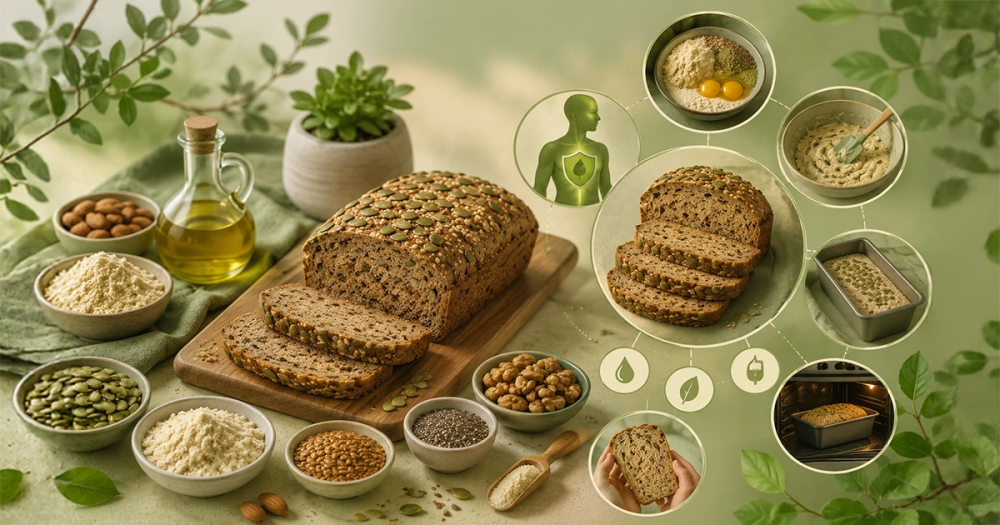
Can you imagine enjoying soft, delicious bread without it raising your blood sugar or knocking you off your keto diet? That's where keto bread comes in – a smart and healthy alternative to traditional bread, designed specifically for those following the keto diet or looking to reduce carbohydrates in their diet.
In this guide, you'll learn simply what keto bread is, its ingredients, its benefits, and how to choose the best type for you or incorporate it into your daily meals.
What is Keto Bread?
Keto bread is a type of healthy alternative to traditional bread, specifically created to fit the keto diet, which focuses on reducing carbohydrates and increasing healthy fats. The main idea is to provide a "keto bread" option that can be enjoyed without affecting ketosis or raising blood sugar levels.
Unlike regular bread made from white flour, keto bread is made from low-carb and gluten-free ingredients such as almond flour, coconut flour, and psyllium husk. These ingredients help give it a texture and feel similar to traditional bread, but without the harmful carbohydrates.
Why is regular bread unsuitable for the keto diet?
Regular bread is one of the foods most incompatible with the keto diet because it's primarily made from white flour, which is rich in rapidly absorbed carbohydrates. These carbohydrates are converted into glucose in the body, leading to a rapid spike in blood sugar levels, which prevents entering or maintaining ketosis.
In the keto diet, the main goal is to minimize carbohydrates so that the body relies on fat as its primary energy source instead of sugar. Therefore, consuming traditional bread, even in small amounts, can disrupt this balance and slow down the diet's progress.
The basic ingredients of keto bread
What is keto bread? It relies on ingredients that are completely different from traditional bread, as white flour is replaced with low-carb, nutrient-rich sources that support the keto diet.
Almond flour: This is one of the most popular alternatives. It's low in carbohydrates and rich in healthy fats and protein, which helps give it a texture similar to traditional bread. Coconut flour: Another low-carb option, but it absorbs a lot of liquid, so it's used in smaller quantities and gives the bread a lighter texture.
Psyllium husk: A key ingredient for giving bread its spongy texture and naturally binding ingredients together.
Chia seeds or flax seeds: Used as natural binders and add high nutritional value from fiber and healthy fats.
Eggs and butter or olive oil: A source of healthy fats that help improve taste and texture and increase satiety.
These ingredients combined make keto bread suitable for a low-carb lifestyle, while maintaining a taste and texture similar to traditional bread without its drawbacks.
Nutritional Value of Keto Bread
Keto bread has a completely different nutritional composition than traditional bread, focusing on reducing carbohydrates and increasing healthy fats and protein, making it suitable for the keto diet and any low-carb diet.
One slice of keto bread contains very few net carbs compared to regular bread.
It also has a higher percentage of healthy fats, which help provide energy and satiety for longer periods. It also provides a moderate amount of protein depending on the ingredients used, such as eggs or almond flour.
This nutritional balance helps to:
Maintain stable blood sugar levels.
Reduce hunger between meals.
Support the body in entering and maintaining ketosis.
Benefits of Keto Bread
What is keto bread? More than just a substitute for traditional bread, it offers a range of benefits that make it a preferred choice for those following the keto diet and those seeking a healthy, low-carb eating pattern.
Supports weight loss: It helps reduce carbohydrate intake, which supports the body in burning fat as its primary energy source.
Stabilizes blood sugar levels: It doesn't cause sudden spikes in glucose, making it suitable for diabetics.
Increases satiety: Thanks to its healthy fats and fiber content, it helps reduce hunger for longer periods.
Stable energy throughout the day: It provides the body with consistent energy without sharp fluctuations in blood sugar or energy.
Gluten-free: Suitable for people with gluten sensitivity or related digestive issues.
Supports adherence to the keto diet: Allows you to eat bread without breaking ketosis.
The most popular types of keto bread
There are many types of keto bread to suit different tastes and needs. Each type relies on different ingredients that give it a distinctive texture and flavor while maintaining a low carbohydrate content.
Almond bread: The most common type, it has a soft texture and a mild flavor, making it an ideal alternative to everyday bread in sandwiches.
Coconut bread: It has a light texture and less density, making it suitable for those who prefer a different taste and a distinctive flavor with a very low carbohydrate content.
Cloud bread: Primarily based on eggs and cream cheese, it is very light and has a fluffy, sponge-like texture.
Sesame bread: An option rich in healthy fats, it has a fluffy texture and a distinctive flavor that complements savory meals.
Who is keto bread suitable for?
Keto bread isn't just an alternative food option; it's suitable for specific groups looking to improve their dietary lifestyle or adhere to low-carb diets without completely giving up bread.
Those following the keto diet: because it helps them stay in ketosis without increasing their daily carbohydrate intake.
Diabetics: as it helps reduce blood sugar spikes compared to traditional bread.
People looking to lose weight: because it reduces carbohydrate consumption and increases feelings of fullness.
Those with gluten sensitivity: because it's often made with gluten-free ingredients like almond or coconut flour.